MatsTools compared
Dematting Tools for Cats: Combs, Splitters and What Not to Use
Dematting combs, mat splitters, mat breakers and rakes compared for long-haired cats: how each one works, how to use it safely, and when no tool is the answer.
We earn from qualifying purchases through links on this page. How we make money.
For a small mat, your fingers come first, then a mat splitter or dematting comb. International Cat Care says to tease mats apart from the root, and the ASPCA suggests a mat splitter for knots that will not come out by hand. No tool is safe on a mat tight against the skin; leave that to a groomer or vet.
The tools on this page all cut or split hair, which is what makes them work and what makes them risky. Choose the gentlest one that will do the job, and stop the moment you cannot see where the mat ends and the skin begins.
The verdict in two sentences
Choose a mat splitter for a single small mat you can lift away from the skin. Choose a dematting comb if your cat gets several small tangles at a time, in a thick coat that you comb regularly.
Dematting tools compared
| Tool | How it works | Best for | Take care |
|---|---|---|---|
| Fingers | Tease the hair apart, root to tip | Every small tangle, first | Slow; stop if the cat objects |
| Mat splitter | A small hooked blade slices a mat into strips | One small mat that lifts from the skin | Blade faces away from the skin |
| Dematting comb | Serrated blades between the teeth cut through tangles | Several small tangles in a thick coat | Work from the outer edge inward |
| Mat breaker or dematting rake | A row of short blades on a handle | Thick coats with knots in the undercoat | Short strokes, light pressure |
| Wide-toothed comb | Separates hair once the mat has loosened | Finishing after any tool | Not a cutting tool |
| Deshedding tool | A fine edge pulls out loose undercoat | Mat-free coats only | Never on a mat |
Mat splitters
A mat splitter has a small, sharp blade set in a handle, often hooked so the cutting edge faces away from the skin. You slide it into the mat from the skin side and draw it outward, cutting the mat into narrow strips that you can then tease apart with your fingers and comb out. The ASPCA suggests trying one when knots will not come out by hand.
Hold the base of the mat firmly between your fingers and the skin, so that nothing pulls on the cat and the skin cannot fold into the blade.
Dematting combs and rakes
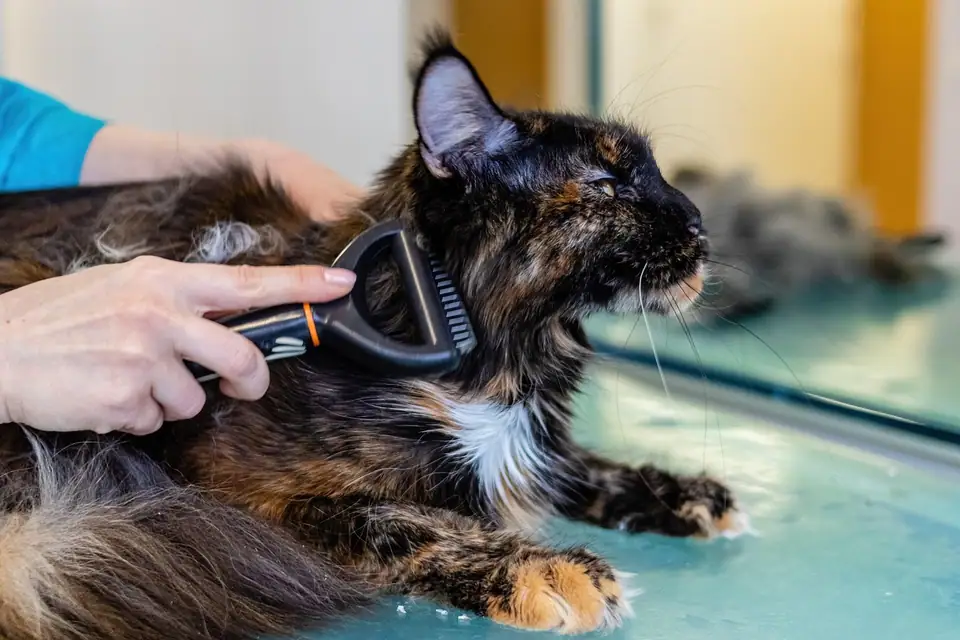
A dematting comb has serrated blades set between its teeth. Coastal Pet, one maker, describes its version as having “finely serrated stainless steel blades” and gives this direction for use: “Start at outer edge & work inward to break apart mats.” Short, picking strokes from the outside of the tangle keep the blades away from the skin.
Mat breakers and dematting rakes put a row of short blades on a handle. They suit thick coats where small knots form deep in the undercoat. Use light pressure; let the blades do the cutting.
Dematting combs, mat splitters and rakes
Live listings, shown by eBay
Opens eBay in a new tab. Check condition, seller feedback and returns.
What to look for when you buy
A dematting tool is a blade you will use close to a squirming cat, so control matters more than speed:
- A size that suits a cat. Many dematting combs are made for dogs. A smaller head is easier to steer around a cat’s armpit or behind the ears.
- Blade edges on the inside. Coastal Pet describes its comb as “designed to avoid contact with skin,” with the cutting edges facing into the coat. Check where the sharp side is before you buy.
- A grip you can hold steadily. A rubber or textured handle helps when the cat shifts. Coastal Pet’s comb has reversible blades for left-handed use; check for this if you are left-handed.
- Easy cleaning. Hair packs between the blades. Pull it out after each session so the tool cuts cleanly next time.
A mat splitter and a wide-toothed comb cover most home needs. If you find yourself reaching for a blade every week, the coat needs more frequent combing, or a groomer’s help.
Detangling sprays
Detangling sprays and powders are sold to help a comb slide through a tangle. Their claims are the makers’ own. Check the label says it is for cats and ask your vet first, since a cat licks whatever is on its coat. No spray turns a tight mat into a safe one.
When no tool is the answer
Safety
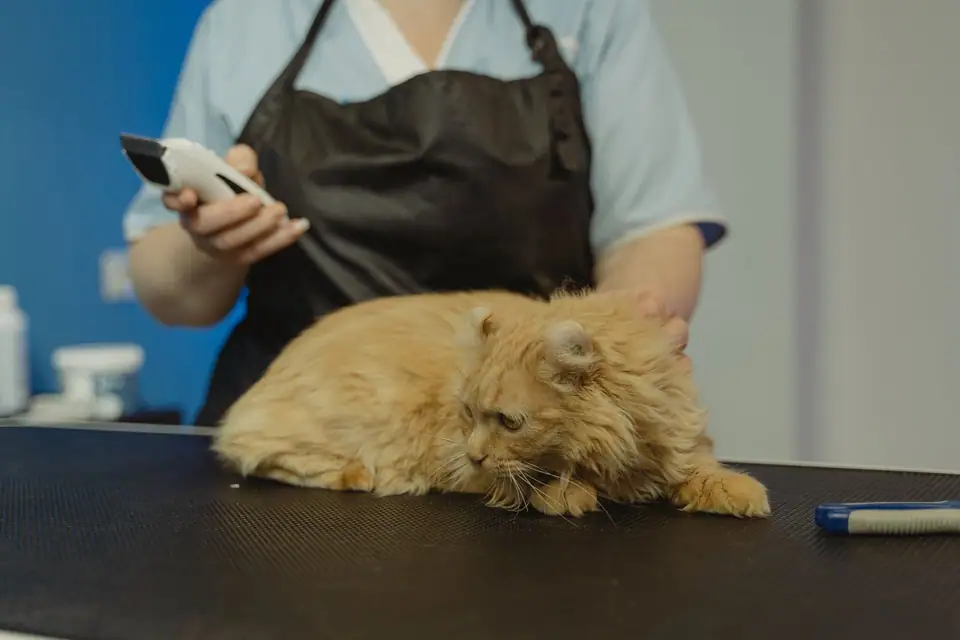
If a mat is tight against the skin, covers a large area, or the cat is in pain, put the tools down. International Cat Care says severe mats often need to be shaved off by the veterinary team, often with sedation, and VCA says to use clippers to remove mats, never scissors.
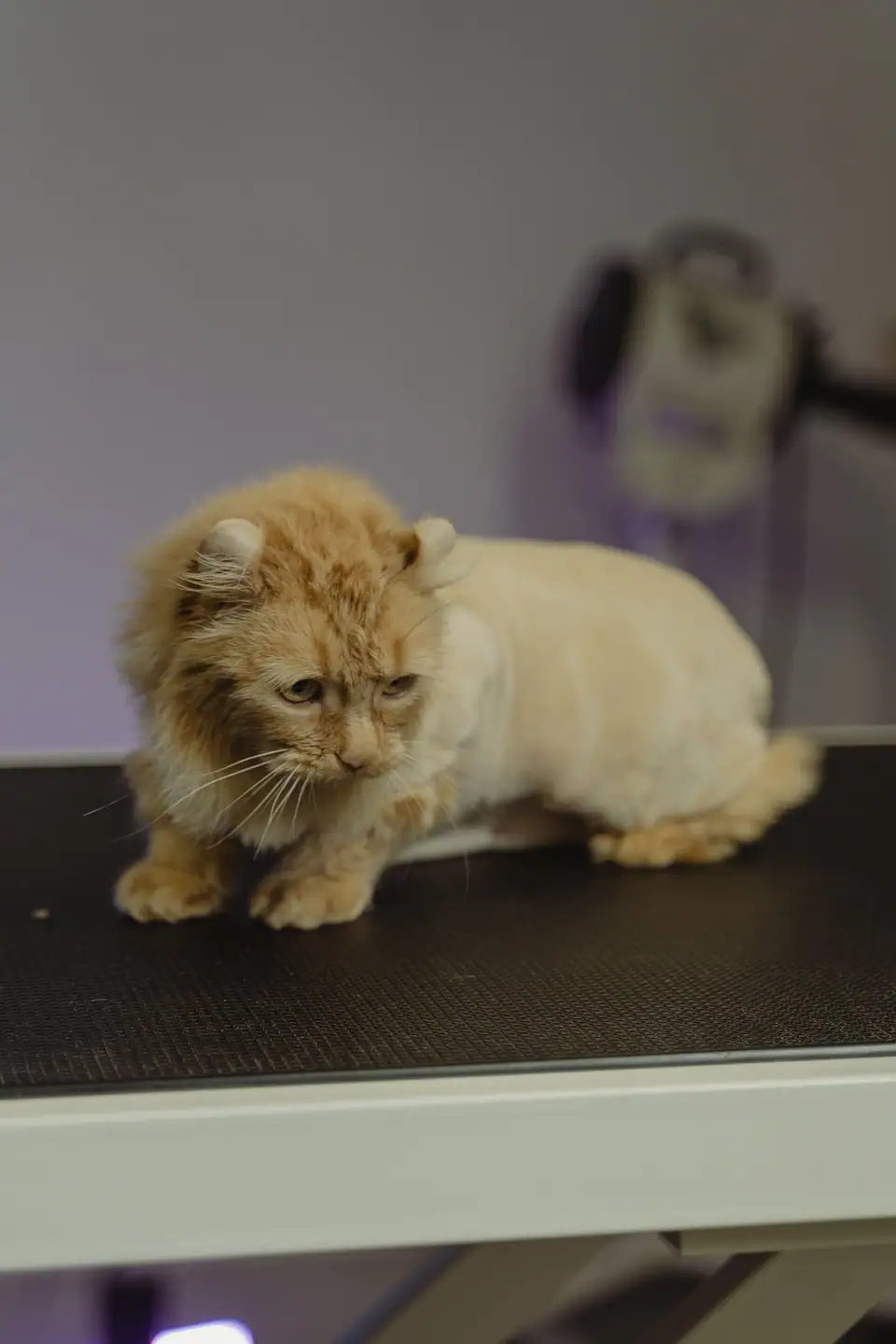
International Cat Care’s warning applies to every blade on this page: in a tight mat it is hard to see where skin ends and hair begins. If you are unsure, book a cat groomer or your vet. A lion cut may be suggested for a cat that mats all over.
After the mat comes out
Once a mat is gone, comb the area with a wide-toothed comb and check the skin underneath for redness. Then look at why it formed: most mats sit in the armpits, groin, behind the ears and between the hind legs, so add those spots to the daily routine. A good comb is the best dematting tool there is, because it stops mats from forming. See brushes and combs and the mats guide.
Wide-toothed combs for finishing after a mat
Live listings, shown by eBay
Opens eBay in a new tab. Check condition, seller feedback and returns.
Frequently asked questions
What is the best dematting tool for cats?
For a small mat, your fingers come first, as International Cat Care advises. If they are not enough, the ASPCA suggests a mat splitter. A dematting comb with serrated blades works through larger tangles from the outer edge inward. None of them is safe on a mat that is tight against the skin.
Do detangling sprays work on cat mats?
Detangling sprays are sold to make combing easier, but the claims are the makers' own. Check that a spray is labeled for cats and ask your vet before using one, since cats lick their coats. A spray does not make a tight mat safe to work on at home.
Can I use a deshedding tool on a matted cat?
No. FURminator says to brush out mats and tangles before using its undercoat tool, because using it on matted fur can bend or break the teeth and feel uncomfortable for the pet.
Is a mat splitter safe for cats?
Used carefully on a small mat that lifts away from the skin, yes: the ASPCA suggests one for knots that will not come out by hand. Hold the base of the mat so the skin does not move, and keep the blade pointed away from the cat.
Sources
- Grooming your catInternational Cat Care
- Cat Grooming TipsASPCA
- Grooming and Coat Care for Your CatVCA Animal Hospitals
- Safari by Coastal Dog De-Matting Comb (product page and directions)Coastal Pet Products
- deShedding tool FAQsFURminator
Filed under MatsStart with Matted Fur on a Long-Haired Cat: What to Do and When to Stop
Keep reading
MatsStart here
Matted Fur on a Long-Haired Cat: What to Do and When to Stop
How to deal with matted fur and mats in cat fur: why mats form, how to tease out small ones, why never scissors, and when a groomer or vet takes over.
MatsQuestion
Lion Cut for Long-Haired Cats: When It Helps and Who Should Do It
What a lion cut is, which long-haired cats it helps, why it belongs with a cat groomer or vet, what to ask before booking, and small trims at home.
GiftsStart here

Gifts for Cat Lovers With a Long-Haired Cat: Ideas by Person
Gifts for cat lovers who live with a long-haired cat, by person: the new owner, the breed devotee, the tidy home, bath day and stocking stuffers.