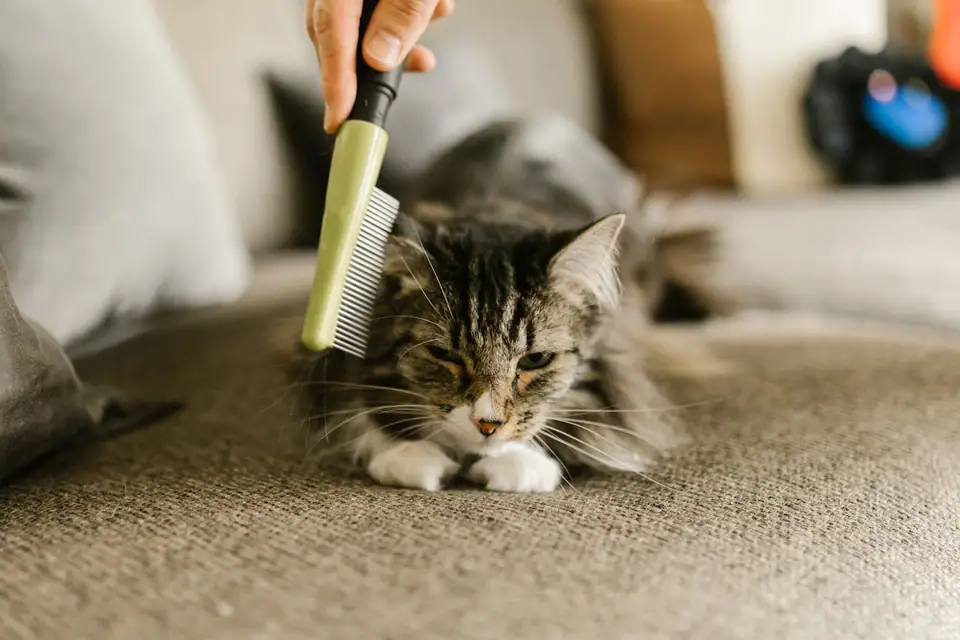
GroomingTools compared
Brushes and Combs for Long-Haired Cats: Which Tool Does What
Which comb or brush a long-haired cat needs: wide and fine steel combs, slicker brushes, grooming gloves and bristle brushes, matched to each coat type.
We earn from qualifying purchases through links on this page. How we make money.
Use a wide-toothed metal comb first and a brush second. International Cat Care lists a wide-toothed comb and a rubber pad or mitten for long-haired cats, and the breed registry recommends a steel comb with coarse and fine teeth for Persians. A slicker brush finishes the topcoat; it does not replace the comb.
The choice is less about brands than about what reaches the skin. A brush can leave a coat looking smooth on top while tangles build underneath. A comb tells you at once: if it snags, there is a knot to work out.
Combs or brushes: the short verdict
Choose a comb if you can only buy one tool: it reaches the base of the hair and finds tangles. Add a slicker brush if your cat enjoys being brushed or has a dense coat that sheds heavily. A rubber grooming glove is the fallback for a cat that will not tolerate either.
| Tool | Reaches the skin | Best for | Watch out for |
|---|---|---|---|
| Wide-toothed steel comb | Yes | Daily combing of any long coat | Pulling: hold the hair at the base on a tangle |
| Fine-toothed steel comb | Partly | Face, paws, finishing | Too fine for a thick coat on its own |
| Comb with offset or rotating teeth | Yes | Loose hair and minor tangles | Still not a mat tool for tight mats |
| Slicker brush | Topcoat only | Lifting loose hair, a fluffy finish | Fine wire pins: use light strokes |
| Grooming glove or rubber pad | No | Cats that resist combs, loose surface hair | Leaves tangles underneath |
| Bristle brush | No | A smooth finish on a silky coat | Does little for a thick undercoat |
Steel combs: the tool that does most of the work
The Cat Fanciers’ Association calls a “steel or Teflon-coated comb with long, coarse and fine teeth” essential for a Persian’s coat. Look for a comb with wide teeth along one half and finer teeth along the other, often sold as a “greyhound” comb. VCA adds that long-toothed metal combs, especially those with rows of offset tines, help remove loose hair and smooth minor tangles.
To use one, part the coat with your free hand and comb in the direction the hair grows. On a tangle, hold the hair at its base so the comb pulls against your fingers, not the cat’s skin. The ASPCA suggests combing the belly and legs by gently working the fur upward toward the head.
Wide and fine steel combs
Live listings, shown by eBay
Opens eBay in a new tab. Check condition, seller feedback and returns.
Slicker brushes: for finishing and shedding
A slicker brush has rows of fine, bent wire pins. It lifts loose hair from the topcoat and leaves a fluffy finish, so it works best after the comb. Two tips:
- Use light strokes. The pins are fine and close to the skin, so let the brush skim rather than press.
- A self-cleaning slicker pushes the collected hair off the pins with a button, which saves time on a heavy shedder.
A slicker is not a mat tool. On a tangle, go back to the comb or your fingers, as the mats guide explains.
Grooming gloves and bristle brushes
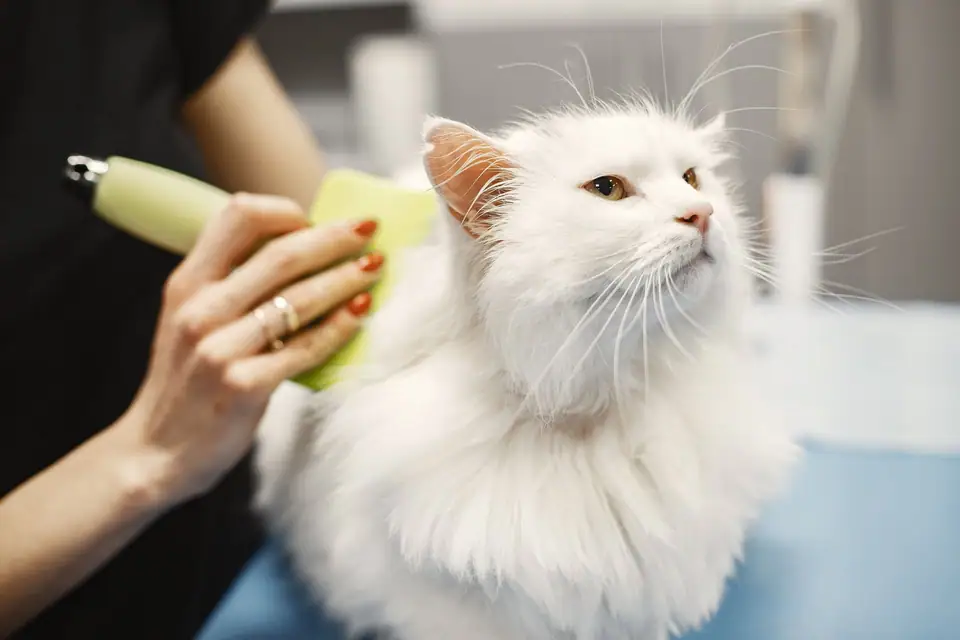
International Cat Care lists a rubber grooming pad or mitten among the tools for long-haired cats. Many cats accept a grooming glove (some sellers call it a mitt) that feels like stroking more readily than a comb, which makes it a good way to start a nervous cat. It collects loose hair from the surface but does not reach tangles near the skin.
Tip
For a cat that runs from the comb, start with the glove during petting, then switch to the comb for a few strokes on the back. Short, pleasant sessions build up to a full comb-through.
A soft bristle brush smooths and polishes a silky coat. It is a finishing tool for coats like the Ragdoll’s, which the breed registry describes as soft and silky with minimal woolly undercoat.
Which tools for which coat?
Breed registries describe long coats in a few broad ways, and each one shifts the kit a little:
- Full, thick coat (Persian, Himalayan): a wide and fine steel comb every day, a slicker brush for finishing. See Persian cat grooming.
- Silky coat with little undercoat (Ragdoll, Birman): a steel comb once or twice a week is enough for many cats, per the registry. See Ragdoll grooming.
- Dense double or triple coat (Norwegian Forest Cat, Siberian): a stainless steel comb year-round, plus a deshedding tool when the winter coat comes out in spring. The CFA notes the Norwegian Forest Cat needs extra attention then.
For a Maine Coon’s shaggy coat, the sister site Large Breed Cats has a guide to grooming a Maine Coon.
How to choose a good comb
- Smooth, rounded tooth tips. Run the comb across the back of your hand: it should glide, not scratch.
- Teeth long enough for the coat. A thick Persian coat needs longer teeth than a Birman’s.
- A grip you can hold for five minutes. A comb with a handle is easier on a wriggling cat than a bare spine.
- Stainless steel. It will not rust if you wash it, and it stays smooth for years.
Keep the tools clean. Pull the hair out of the teeth and pins after every session, and wash combs and brushes now and then in warm, soapy water, then dry them fully. A clean slicker grips loose hair better, and a clean comb shows you at a glance how much the cat is shedding.
Once the comb and brush are sorted, the rest of the routine is on the grooming hub. If you are already facing a knot, start with dematting tools. Buying for someone else? A starter set of combs is the first idea in gifts for cat lovers with a long-haired cat.
Frequently asked questions
What kind of brush do you use on a long-haired cat?
Start with a comb rather than a brush. International Cat Care lists a wide-toothed comb and a rubber grooming pad or mitten for long-haired cats, and the Cat Fanciers' Association recommends a steel comb with coarse and fine teeth for Persians. A slicker brush is useful for finishing the topcoat.
Is a comb or a brush better for a long-haired cat?
A comb does the main job, because its teeth reach the skin and catch tangles that a brush glides over. VCA describes long-toothed metal combs, especially with offset rows of tines, as helpful for loose hair and minor tangles in long coats. Use a brush afterward if you like the finish.
Are grooming gloves good for long-haired cats?
A rubber pad or mitten is on International Cat Care's list of tools for long-haired cats, and many cats accept it more readily than a comb. It picks up loose surface hair but does not reach tangles near the skin, so use it alongside a comb.
Sources
- Grooming your catInternational Cat Care
- Grooming and Coat Care for Your CatVCA Animal Hospitals
- Cat Grooming TipsASPCA
- Persian (breed profile)The Cat Fanciers' Association
- Ragdoll (breed profile)The Cat Fanciers' Association
- Norwegian Forest Cat (breed profile)The Cat Fanciers' Association
- Siberian (breed profile)The Cat Fanciers' Association
Filed under GroomingStart with Grooming a Long-Haired Cat at Home: Tools, Routine and How Often
Keep reading
GroomingStart here
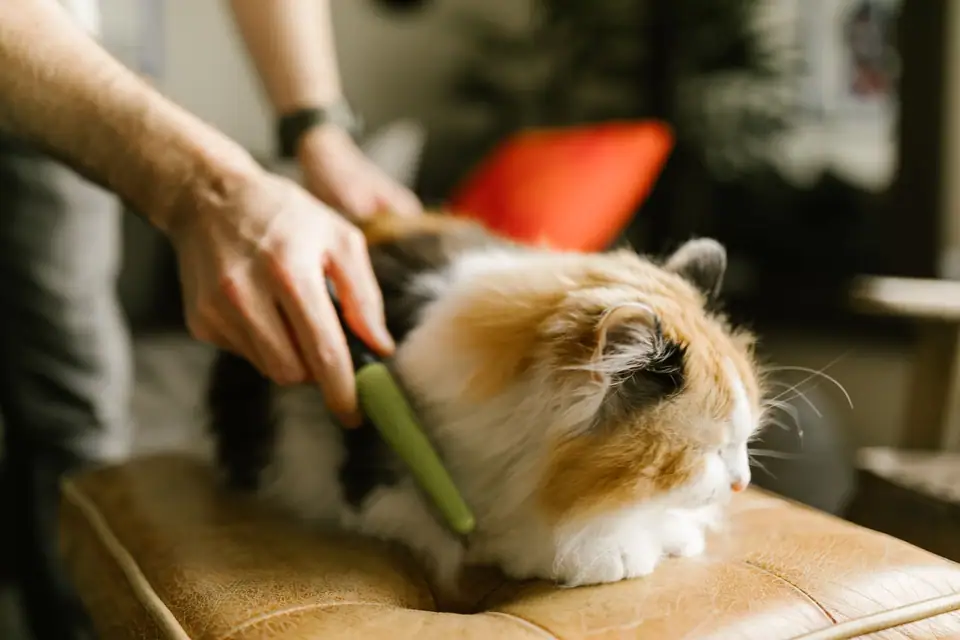
Grooming a Long-Haired Cat at Home: Tools, Routine and How Often
How often to groom a long-haired cat, which tools to use for each job, where tangles start and how to keep sessions short enough that your cat accepts them.
GroomingQuestion
Bathing and Drying a Long-Haired Cat: When, How and What to Use
Does a long-haired cat need baths? When a bath helps, why you comb out mats first, which shampoo to use, and how to dry a thick coat without scaring the cat.
GroomingQuestion
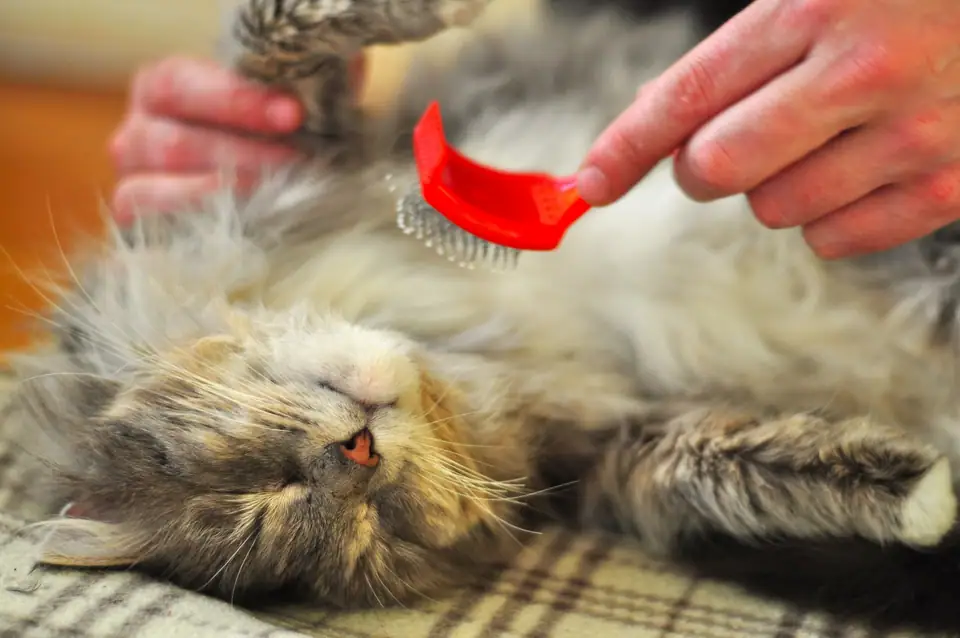
Deshedding Tools for Long-Haired Cats: Safe Use and When to Skip
Is a deshedding tool safe for a long-haired cat? What the blade does, how often makers say to use it, why it never goes on a mat, and the gentler alternatives.