MatsStart here
Matted Fur on a Long-Haired Cat: What to Do and When to Stop
How to deal with matted fur and mats in cat fur: why mats form, how to tease out small ones, why never scissors, and when a groomer or vet takes over.
We earn from qualifying purchases through links on this page. How we make money.
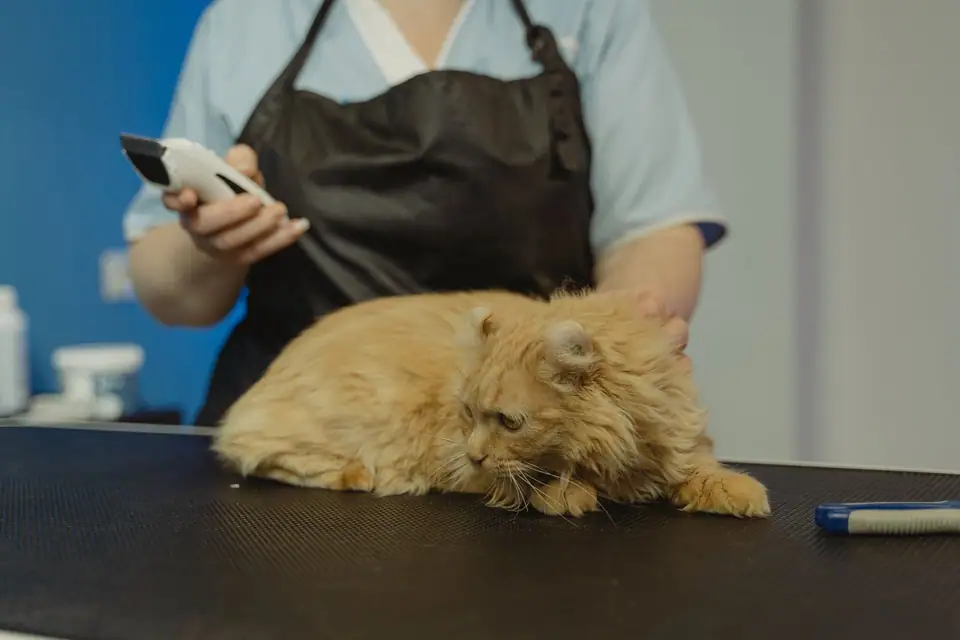
Tease small mats apart with your fingers, working from the root to the tip, and never cut a mat out with scissors. International Cat Care warns that the skin is hard to see inside a tight mat and easy to cut. Tight or widespread mats belong with a groomer or your vet, who may need to clip them under sedation.
A mat is shed hair and tangles packed together until they form a felt-like clump. Left alone it tightens, pulls on the skin and grows. The good news: daily combing stops most mats before they start, and small ones come out at home.
Why mats form in a long coat
Long hair tangles where it rubs and where loose undercoat collects. VCA names the area around the ears, the armpits and the back of the legs, and advises checking the armpits, groin and behind the ears every day. International Cat Care adds the area between the hind legs and between the toes and pads.
Some cats mat more than others:
- Coat type. The breed registry says some Siberian coats need weekly grooming to prevent mats while others go weeks without one. The Persian’s thick coat needs the most care. See breeds.
- A cat that grooms itself less. International Cat Care lists less time spent grooming and a matted, scruffy coat among the signs of arthritis. If an older cat starts to mat, ask your vet.
- Shedding season. Loose undercoat that is not combed out gets caught in the topcoat. See shedding.
Small mats you can handle at home
A small mat is one you can lift away from the skin and feel the hair moving freely underneath. To work one out:
- Hold the base of the mat between your fingers and the skin, so nothing pulls on the cat.
- Tease it apart with your fingers, slowly, from the root toward the end of the hair, as International Cat Care describes.
- Use a mat splitter if fingers are not enough. The ASPCA suggests one for knots that will not come out by hand.
- Comb through with a wide-toothed comb once the mat has loosened.
Short sessions work best. Do part of a mat, give the cat a break, and come back later.
Dematting combs and mat splitters for small mats
Live listings, shown by eBay
Opens eBay in a new tab. Check condition, seller feedback and returns.
Why never scissors
Safety
Do not cut a mat out with scissors, even near the tips. International Cat Care explains that in a matted coat it is “extremely difficult to see where your cat’s skin ends and the hair starts,” and you could cut your cat. VCA says to use clippers to remove mats, never scissors.
A cut meant for the hair can open the skin hidden inside the clump. Clippers, in the hands of a groomer or the vet team, are the way to remove a mat that will not tease out.
When to stop and book a groomer or the vet
Stop and call a professional cat groomer or your veterinary team when:
- the mat sits tight against the skin and does not lift away;
- there are many mats, or they join into a sheet;
- the skin under a mat looks red, sore or smells;
- the cat cries, bites or panics when you touch the area.
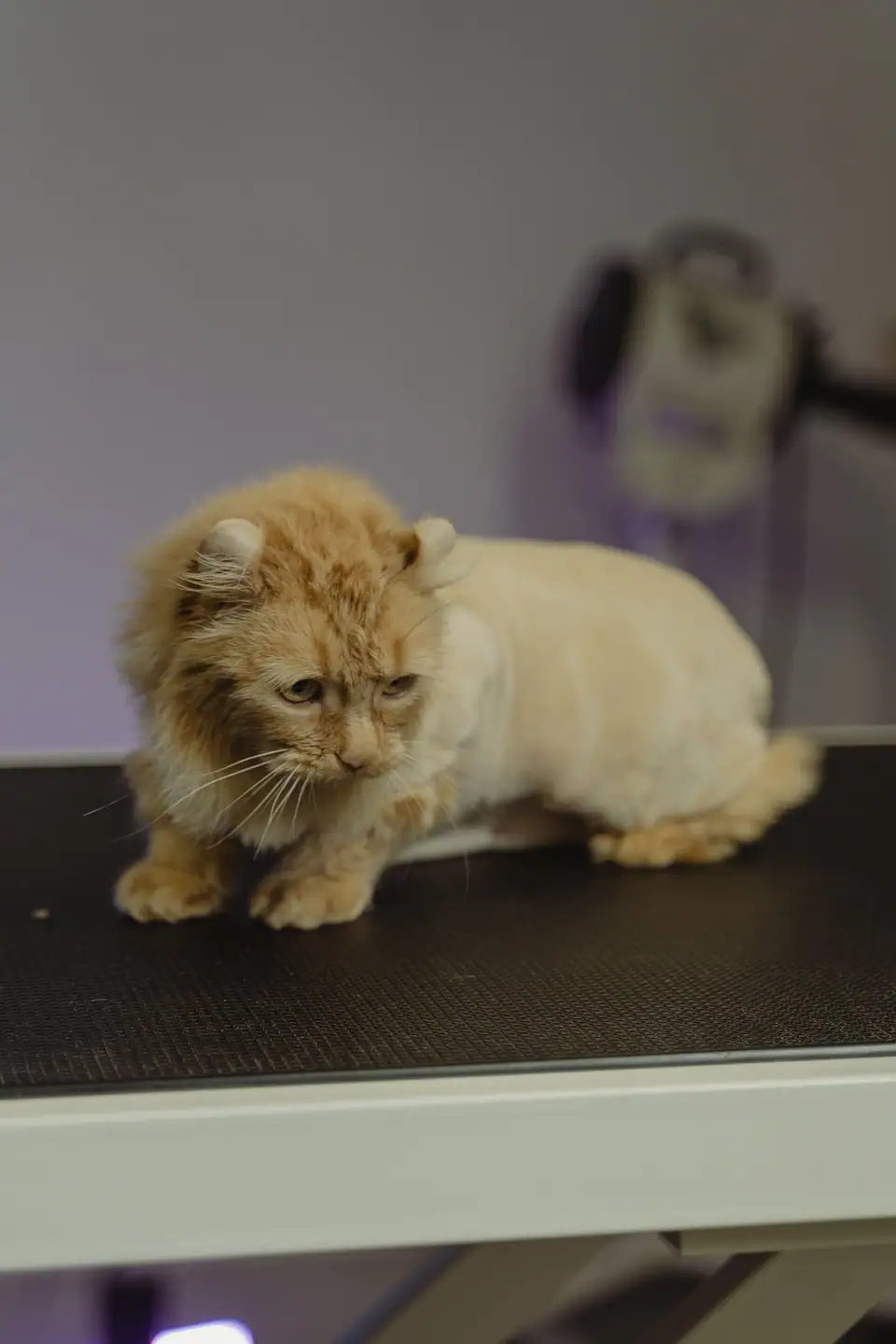
International Cat Care says severe mats often need to be shaved off by the veterinary team, which often requires sedation or a general anesthetic. VCA adds that few cats tolerate the noise of clippers, so sedation is sometimes needed. A full-body clip such as a lion cut is one option.
What happens if mats are left
Mats do more than look untidy. In an ASPCA article on matted coats, an ASPCA veterinarian notes that even very mild mats can cause skin irritation and progress to infected lesions, that fleas and ticks can live deep in a mat out of sight, and that severe mats can cause strangulating wounds on a limb. The article is mostly about dogs, and International Cat Care and VCA give the same advice for cats: deal with mats early, and let a professional handle severe ones.
Keeping mats from coming back
Once the mats are gone, the goal is to stop new ones before they start. Most of that is routine:
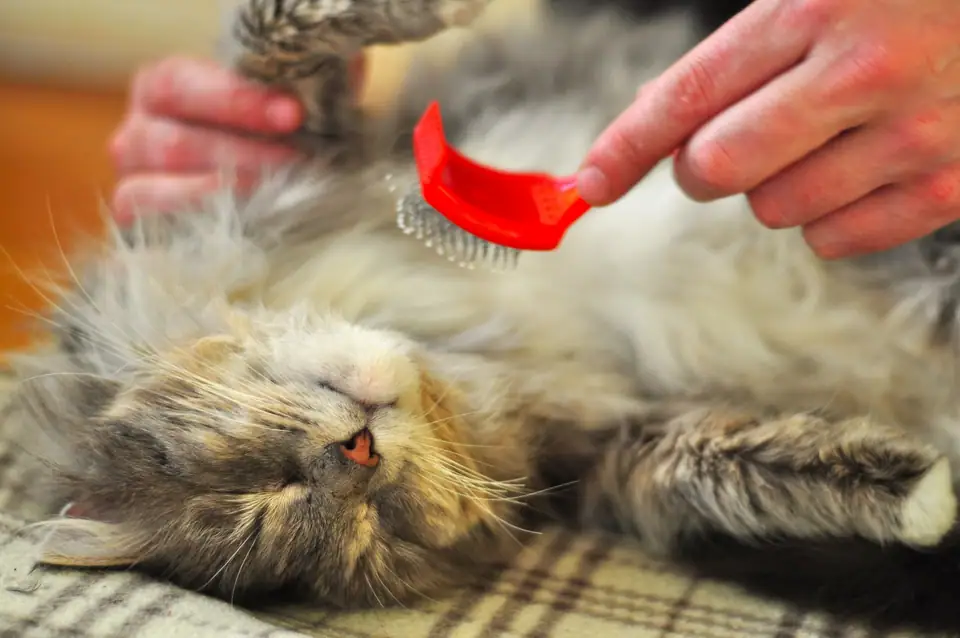
- Comb daily, to the skin. International Cat Care says long-haired cats need grooming at least daily, and VCA advises inspecting the coat every day for tangles under the armpits, in the groin and behind the ears.
- Work the friction spots first. Lift each front leg to reach the armpit, and comb between the hind legs and around the collar line, where fur rubs.
- Comb more in shedding season. Loose undercoat is what packs into a mat. A deshedding tool on a mat-free coat removes it faster in spring.
- Keep sessions short and pleasant. A cat that accepts a few minutes every day is easier to keep mat-free than one held down once a week.
- Watch for change. If a cat that used to stay tidy starts to mat, ask your vet whether pain or stiffness is stopping it from grooming.
A cat with a thick coat that mats no matter how often you comb may do better with regular visits to a cat groomer, and the Cat Fanciers’ Association notes that many Persian owners rely on one. A full clip is the last resort, not the first.
Guides in this section
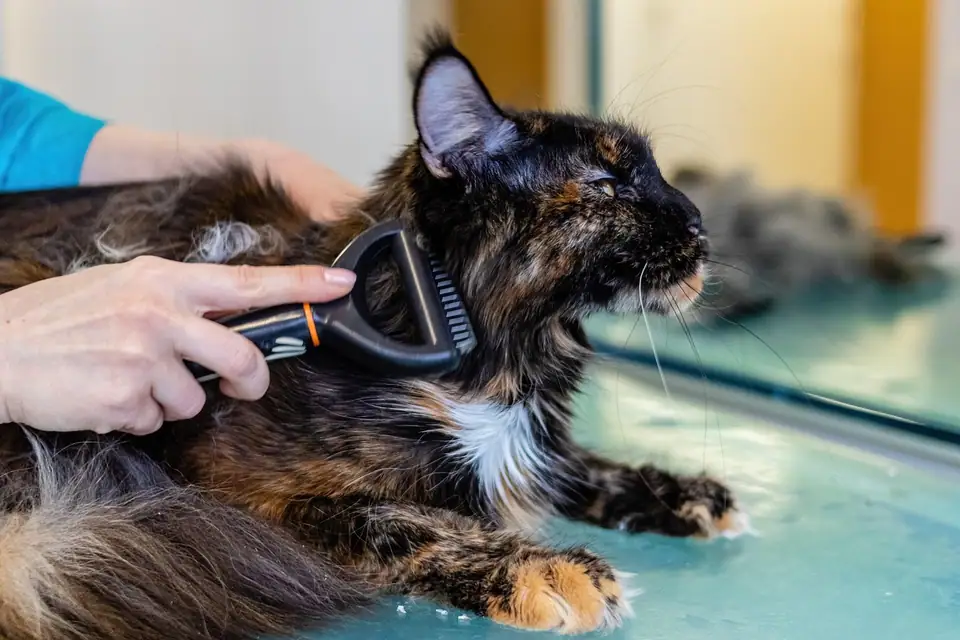
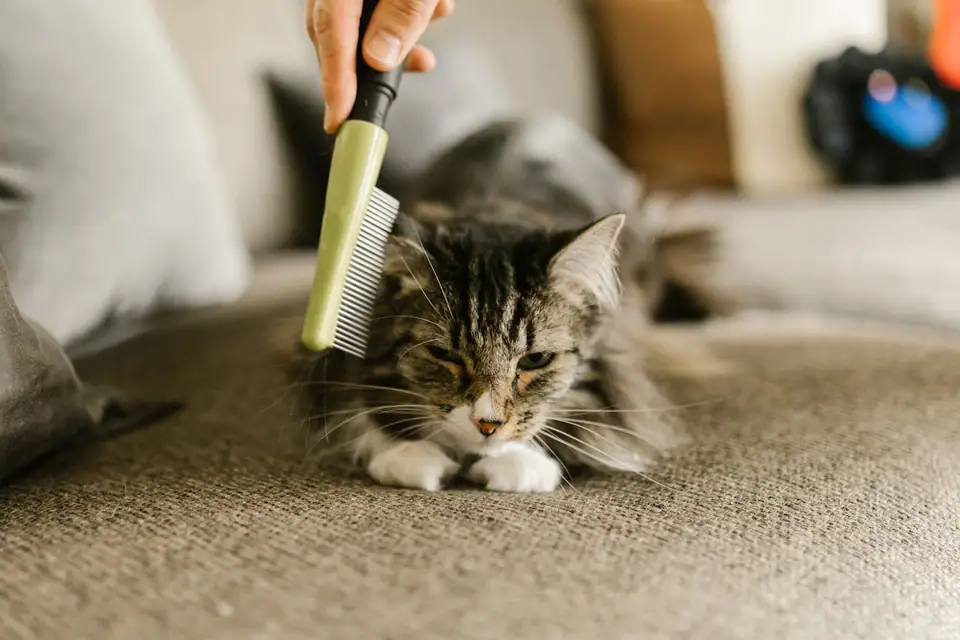
Read dematting tools to choose between combs, splitters and rakes, and lion cut to see when a full clip helps. Prevention is the daily routine.
Frequently asked questions
Is matted fur painful for cats?
It can be. An ASPCA veterinarian notes that even very mild mats can irritate the skin and progress to infected sores, and severe mats can cause wounds. A mat close to the skin also pulls on it every time the cat moves.
Can I cut a mat out of my cat's fur with scissors?
No. International Cat Care warns that it is extremely difficult to see where the skin ends and the hair starts in a tight mat, so you could cut your cat. VCA says to use clippers, never scissors, and a groomer or vet can do it safely.
How do I get a small mat out of my cat's fur?
Tease it apart gently with your fingers, working slowly from the root toward the end of the hair, as International Cat Care advises. If that does not work, the ASPCA suggests a mat splitter. Stop and book a groomer or vet if the mat is tight to the skin.
Why does my long-haired cat get mats?
Long coats tangle where they rub, such as the armpits, groin, behind the ears and between the hind legs, which VCA and International Cat Care name as common spots. A cat that grooms itself less, for example because of arthritis, also mats more easily.
Sources
- Grooming your catInternational Cat Care
- Grooming and Coat Care for Your CatVCA Animal Hospitals
- Cat Grooming TipsASPCA
- A Haircut Could Save a Life: Preventing Your Pet's Coat from Matting (March 11, 2015)ASPCA
- Arthritis in catsInternational Cat Care
- Siberian (breed profile)The Cat Fanciers' Association
- Persian (breed profile)The Cat Fanciers' Association
Filed under Mats
Keep reading
MatsTools compared
Dematting Tools for Cats: Combs, Splitters and What Not to Use
Dematting combs, mat splitters, mat breakers and rakes compared for long-haired cats: how each one works, how to use it safely, and when no tool is the answer.
MatsQuestion
Lion Cut for Long-Haired Cats: When It Helps and Who Should Do It
What a lion cut is, which long-haired cats it helps, why it belongs with a cat groomer or vet, what to ask before booking, and small trims at home.
GiftsStart here
Gifts for Cat Lovers With a Long-Haired Cat: Ideas by Person
Gifts for cat lovers who live with a long-haired cat, by person: the new owner, the breed devotee, the tidy home, bath day and stocking stuffers.