GroomingStart here
Grooming a Long-Haired Cat at Home: Tools, Routine and How Often
How often to groom a long-haired cat, which tools to use for each job, where tangles start and how to keep sessions short enough that your cat accepts them.
We earn from qualifying purchases through links on this page. How we make money.
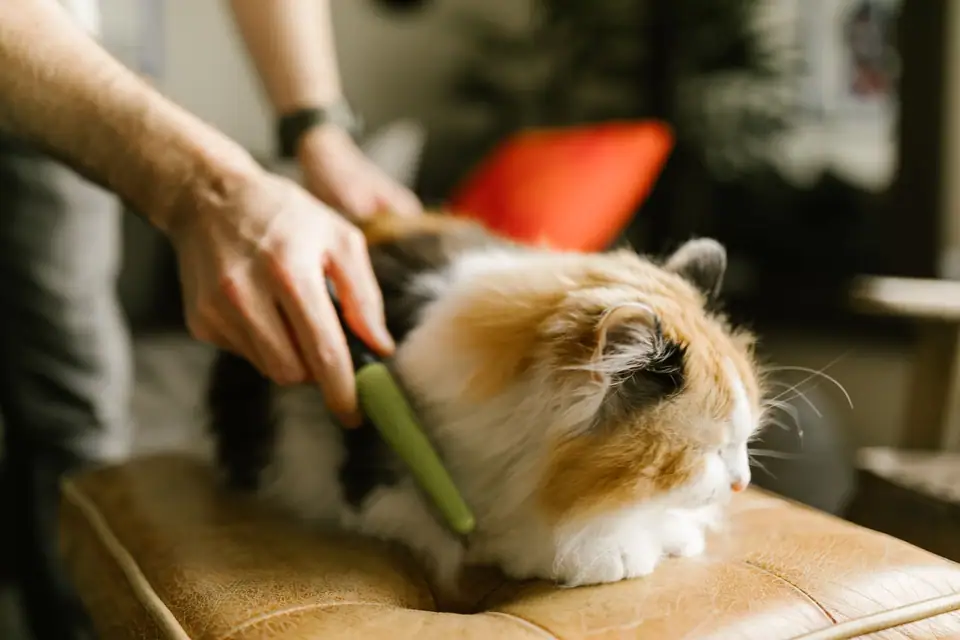
Groom a long-haired cat a little every day. International Cat Care says long coats need grooming at least daily, for as long as the cat is comfortable. Use a wide-toothed metal comb that reaches the skin, check the armpits, groin and behind the ears for tangles, and keep each session short.
A long coat does not look after itself the way a short one does. Loose undercoat stays caught in the longer hair, and the places where the coat rubs, such as the armpits, tangle first. A few minutes of combing a day keeps those tangles from tightening into mats, and it cuts down the hair your cat swallows and leaves on the furniture.
How often should you groom a long-haired cat?
Daily is the veterinary guidance. International Cat Care says long-haired cats need grooming “at least daily,” and VCA Animal Hospitals advises daily brushing for long, silky or curly coats. The ASPCA suggests a session every few days for indoor long-haired cats, which may be enough for the easier coats.
The coat itself matters. A Persian’s thick coat needs far more than a Birman’s silky one, which its breed registry describes as not prone to matting. If your cat’s coat stays smooth with combing every other day, that is fine. If you find a new tangle each time, comb daily.
The daily comb-through
Pick a time when your cat is relaxed, such as after a meal. Then:
- Start where the cat likes it. The cheeks, the back and the top of the head are easy places to begin.
- Comb with the growth, down to the skin. Part the coat with your free hand so the comb reaches the base of the hair.
- Check the trouble spots. VCA names the armpits, the groin and behind the ears as places to inspect every day. International Cat Care adds the area between the hind legs and between the toes.
- Stop before the cat does. International Cat Care’s advice is to end each session before the cat shows any discomfort.
Steel combs that reach the skin
Live listings, shown by eBay
Opens eBay in a new tab. Check condition, seller feedback and returns.
What each grooming tool does
You do not need a drawer full of brushes. Most of the work is done with a comb.
| Tool | What it does | When to use it |
|---|---|---|
| Wide-toothed metal comb | Reaches through the coat to the skin and finds tangles | Every session, all over |
| Fine-toothed comb | Finishes the coat and works the face and paws | After the wide comb |
| Slicker brush | Lifts loose hair from the topcoat | Finishing, on the back and sides |
| Rubber pad or mitten | Picks up loose hair from the surface | Cats that dislike combs, shedding season |
| Deshedding tool | Removes loose undercoat | Shedding season, on a mat-free coat only |
| Dematting comb or mat splitter | Works through a small mat | Small mats that fingers cannot tease apart |
International Cat Care lists a wide-toothed comb and a rubber grooming pad or mitten for long-haired cats. VCA notes that metal combs with long, offset teeth help remove loose hair and smooth minor tangles. The Cat Fanciers’ Association recommends a steel comb with coarse and fine teeth for Persians.
Slicker brushes for finishing a long coat
Live listings, shown by eBay
Opens eBay in a new tab. Check condition, seller feedback and returns.
Where to go next in the routine
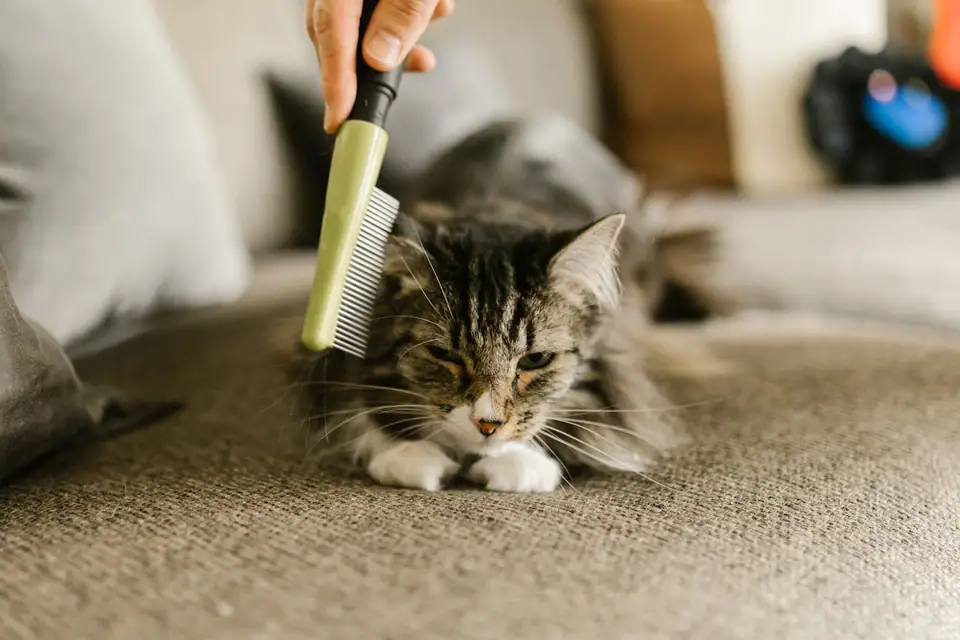
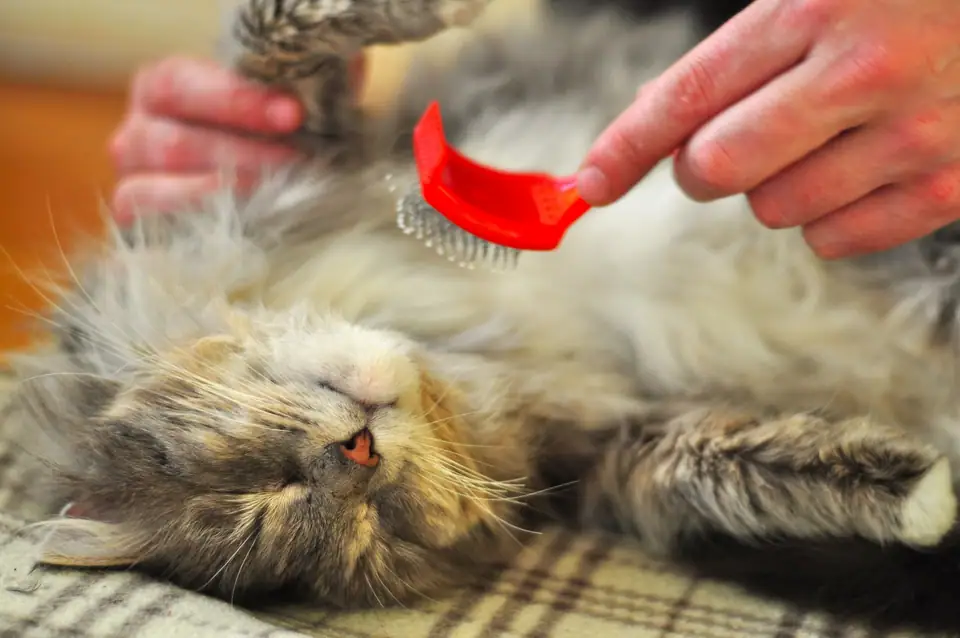
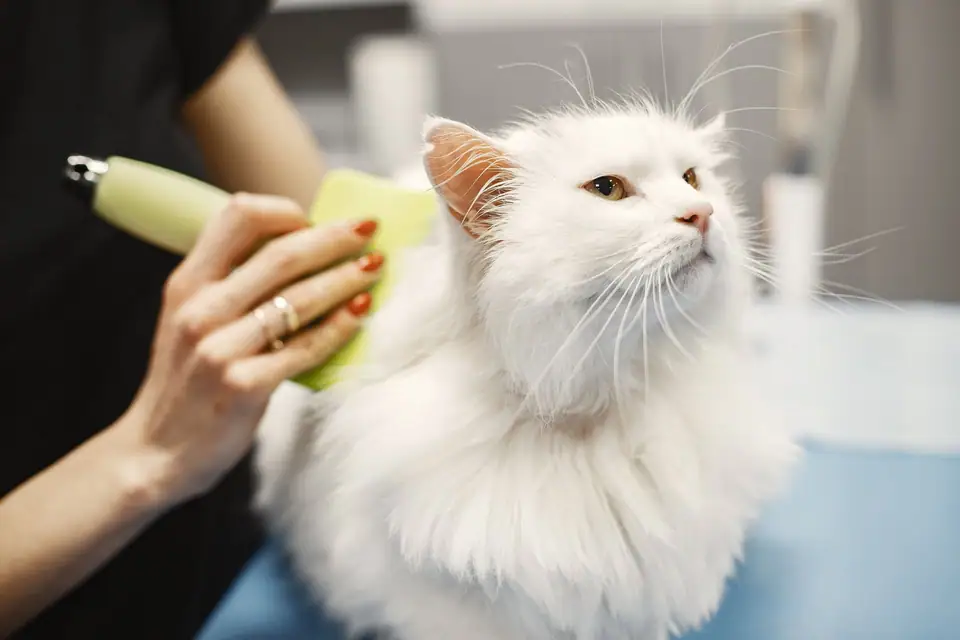
Each page answers one part of the routine: which brush or comb does what, how to use a deshedding tool safely, when a bath helps and how to dry a thick coat, and how to find the nail under the fur.
Getting a cat used to grooming
A cat that dreads the comb will hide from it. International Cat Care suggests getting a cat used to grooming from an early age, and keeping sessions as short as the cat is comfortable with. For an adult cat new to combing, a minute a day is a good start. Follow each session with something the cat enjoys, such as a treat, play or a meal, and build up a little at a time. Long, forced sessions teach a cat to hide when the comb comes out.
A five-minute routine
- Comb the back and sides with the wide-toothed comb.
- Lift each front leg and comb the armpit.
- Comb behind the ears and under the chin.
- Check the belly and between the hind legs.
- Finish with a slicker brush or a fine comb, then a treat.
When to book a groomer or the vet
Some jobs are not for home. Book a professional cat groomer or your veterinary team when:
- A mat sits tight against the skin. International Cat Care warns that scissors can cut the cat, because it is hard to see where skin ends and hair begins. See what to do about mats.
- The coat is matted all over. Severe mats often need to be shaved off by the veterinary team, sometimes with sedation, according to International Cat Care.
- The cat stops grooming itself. International Cat Care lists less time spent grooming and a matted, scruffy coat among the signs of arthritis, so ask your vet.
- A trim would help a coat you cannot keep up with. A lion cut is one option a groomer or vet can discuss.
Daily combing also helps with hair indoors and hairballs. Cornell’s Feline Health Center recommends brushing and combing every day to cut down hairballs, which come up more often in shedding season. For more, see shedding and hairballs.
Frequently asked questions
How often should you groom a long-haired cat?
International Cat Care says long-haired cats need grooming at least daily, for as long as the cat is comfortable. VCA also advises daily brushing for long, silky or curly coats. The ASPCA puts it at every few days for indoor long-haired cats, so some easy coats may manage with less.
Should I take my long-haired cat to a groomer?
Many owners of heavy-coated breeds use a professional groomer, and the Cat Fanciers' Association notes that many Persian owners do. A groomer is the right call for mats that sit tight against the skin, or for a cat that will not accept combing at home.
Do long-haired cats need to be brushed if they groom themselves?
Yes. A long coat traps loose hair that the cat then swallows while self-grooming, and Cornell's Feline Health Center recommends daily brushing and combing to reduce hairballs. Combing also finds tangles before they tighten into mats.
What is the best way to start grooming a cat that hates it?
Keep sessions very short and end before the cat shows any sign of discomfort, as International Cat Care advises. Start with the areas the cat enjoys, such as the cheeks and back, and come back later rather than holding the cat still.
Sources
- Grooming your catInternational Cat Care
- Arthritis in catsInternational Cat Care
- Grooming and Coat Care for Your CatVCA Animal Hospitals
- Birman (breed profile)The Cat Fanciers' Association
- Cat Grooming TipsASPCA
- The Danger of HairballsCornell Feline Health Center
- Persian (breed profile)The Cat Fanciers' Association
Filed under Grooming
Keep reading
GroomingQuestion
Bathing and Drying a Long-Haired Cat: When, How and What to Use
Does a long-haired cat need baths? When a bath helps, why you comb out mats first, which shampoo to use, and how to dry a thick coat without scaring the cat.
GroomingTools compared
Brushes and Combs for Long-Haired Cats: Which Tool Does What
Which comb or brush a long-haired cat needs: wide and fine steel combs, slicker brushes, grooming gloves and bristle brushes, matched to each coat type.
GroomingQuestion
Deshedding Tools for Long-Haired Cats: Safe Use and When to Skip
Is a deshedding tool safe for a long-haired cat? What the blade does, how often makers say to use it, why it never goes on a mat, and the gentler alternatives.