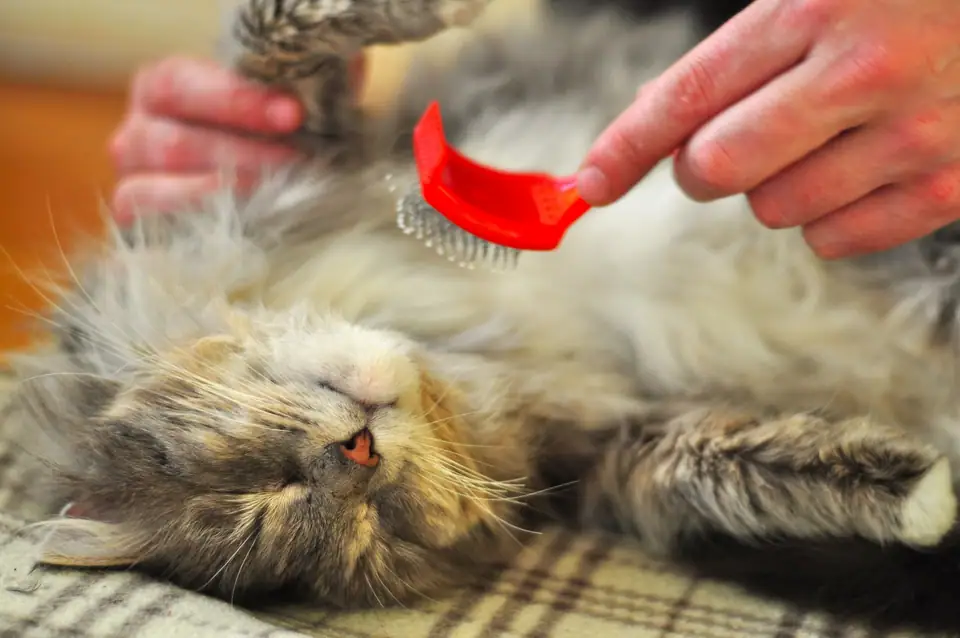
GroomingQuestion
Deshedding Tools for Long-Haired Cats: Safe Use and When to Skip
Is a deshedding tool safe for a long-haired cat? What the blade does, how often makers say to use it, why it never goes on a mat, and the gentler alternatives.
We earn from qualifying purchases through links on this page. How we make money.
A deshedding tool is safe for most long-haired cats when it is used gently on a mat-free coat. Its edge pulls loose undercoat through the topcoat. FURminator suggests one or two sessions a week of 10 to 20 minutes, brushing out tangles first, and skipping cats with sensitive skin.
Think of a deshedding tool as a shedding-season extra, not a replacement for the comb. Daily combing finds tangles and removes loose hair. A deshedding tool reaches deeper into a dense undercoat, which is why it helps most when a thick coat is coming out in clumps.
What a deshedding tool does
Most deshedding tools have a fine-toothed steel edge set in a handle. Drawn through the coat, the edge catches loose, dead undercoat and pulls it out, while the longer guard hairs slide past. VCA notes that cats living indoors shed their undercoat and guard hairs at low levels all year round, so even an indoor cat has loose hair to remove.
Undercoat rakes do a similar job with one or two rows of longer, widely spaced teeth instead of a continuous edge.
| Tool | How it works | Suits | Not for |
|---|---|---|---|
| Deshedding tool (edge) | Fine steel edge catches loose undercoat | Dense double and triple coats | Mats, sensitive skin, silky single coats |
| Undercoat rake | Long teeth comb out loose undercoat | Very long or thick coats | Tight mats near the skin |
| Steel comb | Teeth reach the skin and find tangles | Every coat, every day | Removing large amounts of undercoat quickly |
Long-hair versions and why they matter
Many makers sell the same tool in long-hair and short-hair versions, sized for the cat. The long-hair version is designed to reach through a longer topcoat. When you shop, read the coat length on the label and the maker’s size guide rather than buying by price alone.
Deshedding tools and undercoat rakes for long hair
Live listings, shown by eBay
Opens eBay in a new tab. Check condition, seller feedback and returns.
How to use one safely
The maker’s own instructions are the place to start. FURminator’s advice for its undercoat tool:
- Remove mats and tangles first. Brush them out before you start.
- Use it on a dry coat, in short sessions of 10 to 20 minutes, once or twice a week.
- Skip it on sensitive skin. FURminator says the tool should not be used on pets with particularly sensitive skin.
Add two common-sense checks before each session. Look over the skin for sores or scabs, and stop if the cat tenses, flicks its tail or tries to leave. International Cat Care’s general rule for grooming applies here too: end before the cat shows discomfort.
Safety
Never use a deshedding tool on a mat. FURminator warns that matted fur can bend or break the teeth and feel uncomfortable for the pet. Work small mats out with your fingers or a dematting tool, and leave tight mats to a groomer or your vet.
When to skip it
A deshedding tool is the wrong choice when:
- The coat is silky with little undercoat. The breed registry describes the Ragdoll’s coat as having minimal woolly undercoat; a comb is usually enough. See Ragdoll and Birman grooming.
- The skin is red, flaky or broken. Ask your vet first.
- The cat is matted. Deal with the mats first, as the mats guide explains.
The best time of year to deshed
Dense coats change with the seasons. The Cat Fanciers’ Association says the Norwegian Forest Cat’s undercoat reaches full development in winter and needs extra attention in spring, as the winter coat gives way to a lighter one. It describes the Siberian’s coat as noticeably thicker in the colder months.
Shedding also matters inside the cat. Cornell’s Feline Health Center notes that hairballs are more frequent in the seasons when cats shed, and long-haired breeds are at greater risk. Extra combing in spring and autumn means less hair swallowed. For the full picture, see why long-haired cats shed so much and hairballs.
For the everyday tools that come before a deshedding tool, see brushes and combs and the grooming routine.
Frequently asked questions
Is it okay to use a deshedding tool on a cat?
Yes, on a cat with an undercoat and healthy skin, used gently. FURminator says its undercoat tool can be used on cats that shed and have an undercoat, but not on pets with particularly sensitive skin, and that mats and tangles should be brushed out first.
How often should I deshed my long-haired cat?
FURminator, the best-known maker, suggests using its undercoat tool once or twice a week for 10 to 20 minutes, with the time depending on the breed. Daily combing still comes first; the deshedding tool is an extra for shedding season.
Can I use a short-hair deshedding tool on a long-haired cat?
Pick the version labeled for long hair if the maker sells one. Makers size and design their tools for coat length, and a tool meant for short coats may not reach through a long topcoat to the loose undercoat.
Do you need to deshed a long-haired cat?
Not every cat needs a deshedding tool. Daily combing removes loose hair too. A deshedding tool helps most on dense double coats, such as the Norwegian Forest Cat's, when the winter undercoat comes out in spring.
Sources
- deShedding tool FAQsFURminator
- Grooming and Coat Care for Your CatVCA Animal Hospitals
- The Danger of HairballsCornell Feline Health Center
- Norwegian Forest Cat (breed profile)The Cat Fanciers' Association
- Siberian (breed profile)The Cat Fanciers' Association
- Grooming your catInternational Cat Care
Filed under GroomingStart with Grooming a Long-Haired Cat at Home: Tools, Routine and How Often
Keep reading
GroomingStart here
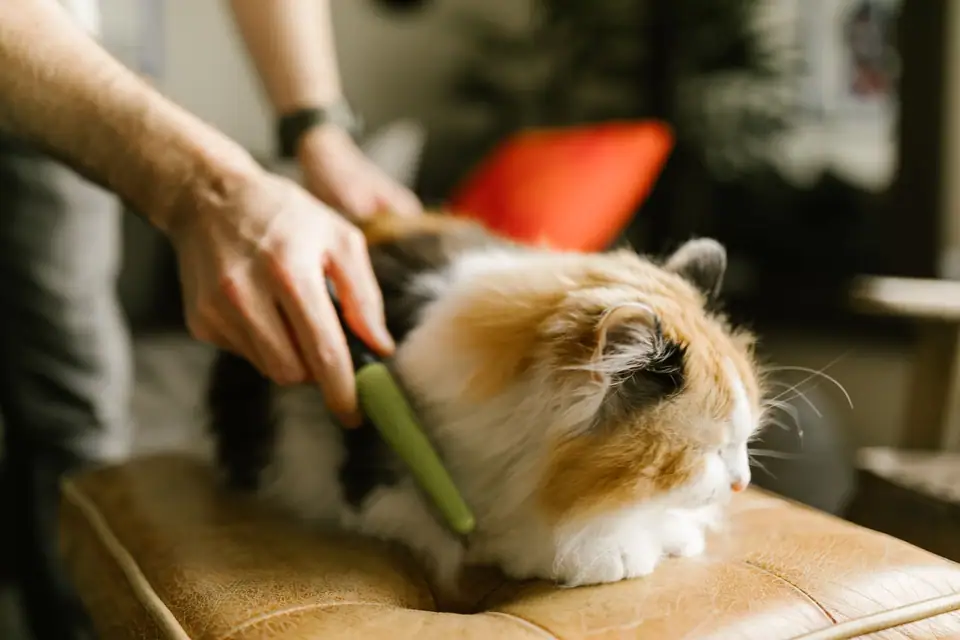
Grooming a Long-Haired Cat at Home: Tools, Routine and How Often
How often to groom a long-haired cat, which tools to use for each job, where tangles start and how to keep sessions short enough that your cat accepts them.
GroomingQuestion
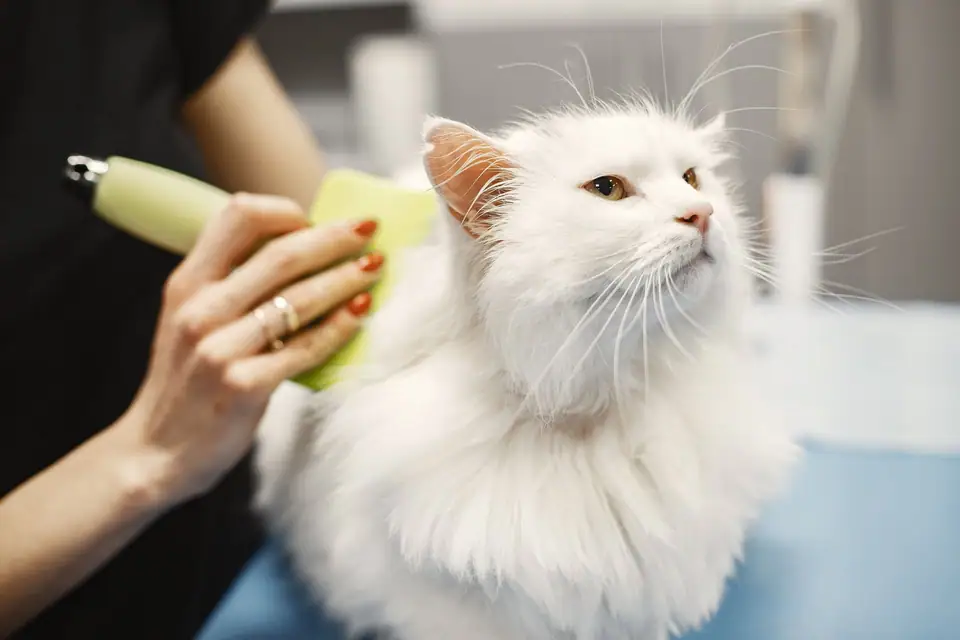
Bathing and Drying a Long-Haired Cat: When, How and What to Use
Does a long-haired cat need baths? When a bath helps, why you comb out mats first, which shampoo to use, and how to dry a thick coat without scaring the cat.
GroomingTools compared
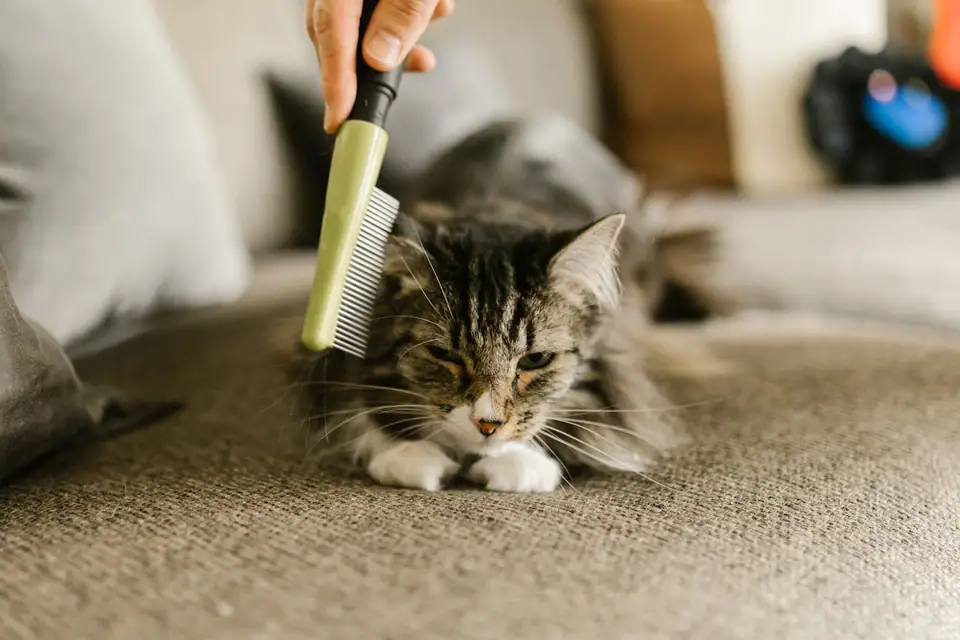
Brushes and Combs for Long-Haired Cats: Which Tool Does What
Which comb or brush a long-haired cat needs: wide and fine steel combs, slicker brushes, grooming gloves and bristle brushes, matched to each coat type.